Jared your ekphrastic poem inspired by Les Demoiselles d’Avignon is both insightful and disturbing. The clear empathy shown to so thoroughly describe the experience of these women has led to an evocative and deep, creative piece. The harsh reality you paint for these women in your piece is so well communicated through your poem that it leaves a deep emotional effect on the reader. I have no criticism of this creative piece but only an interesting observation that struck me as I looked at the image and read your words, and that is of the vast spectrum of interpretation from one human to the next. While I applaud your vision of this painting mine was so vastly different, but through your poem I was able to experience your contrasting experience of the painting and that is a testament to your poetic ability.
Peer Review 1
Response to Ellie McCracken’s “An atmospheric reading of Wilfred Owen’s ‘Dulce et Decorum'”
Ellie this reading and video is simply exceptional. Your expert use of vocabulary and technique analysis leads to an in-depth discussion of a very high standard. Your technical skills also shine in a well edited and digestible video that would be appropriate in any HSC Extension English lesson plan. My only recommendation would be for a slower reading pace of Wilfred Owen’s ‘Dulce et Decorum Est’ to ensure a deep absorption of the poem with a rhythm reflective of the sombre nature of the work. Congratulations on a fantastic blog
Reference of the critiqued blog:
ENGL202 – Assessment One, Part B
A Mother’s Soldier
Blog 2-Take the first line of any one of the poets studied this week, and in the style of that poet, compose your own poem about the horror of wars as you might imagine them.
Image credit Getty
‘They’ inspired by Siegfried Sassoon
The Bishop tells us: ‘When the boys come back’
The neighbours say ‘When you are home’
Your sister tells me ‘It wont be long till we see him wind down the track’
But I know, I know that you are flown
They say but they do not see
That my boy is never coming home to me
Some they will return
But their spirits lie with you
The fires in their eyes no longer burn
I know that to be dead is better, its true
They say but they will never see
That its better my stolen boy does not return home to me
Prufrock and Parenthood
Blog 3- ‘Have you experienced, or do you know someone who has experienced any of the situation described in “The Love Song of J.Alfred Prufrock”? Tell their or YOUR story about what it feels like to be him.’
T.S.Eliot’s J.Alfred Prufrock is a man filled with fears of judgment and his own inadequacies. The stream of conscious style poem clearly illiterates the internal anxiety Prufrock suffers at the potential loss or failures that may occur in his life and in turn the crippling anxiety that leads to lost opportunities. This very real and confronting exploration touches at the essence of human existence. It would not be inaccurate to state that there are elements of this narrative in all adult human experience.
The regular referrals to aging and the overall sense of decay, limited time and looming mortality are very real occurrences as you age, especially through the process of watching the growth of your own children. The act of parenthood can bring forth so many feelings of regret and loss at things that were not achieved and now seem impossible under the weight of new responsibility. I feel this is particularly true for women, who through motherhood can lose so much of their identity and may experience this loss of opportunities in a very real way. A common theme for early mothers is the isolation and anxiety at feeling left out of society and the overwhelming judgment from family, friends and onlookers that seems to highlight your insecurity of failure as a mother. Then as your children age the effects of parenthood seem to speed up the aging process on a cellular level and Eliot’s ironic referrals to time and its promise of things to come sounds remarkably like the internal rational of so many mothers; I’ll get time for that when the kids are older.
The fragmented nature of this modernist poem lends very much to the fragmented situation a woman finds herself in after the life changing event that is childbirth. Distanced from previously normal practices like work and social gatherings, ghost like behind the duty of motherhood, this comparable experience while not seemingly obvious with Prufrock is definitely one that rings true to me, based on my experience both as a mother and also in observation of mothers I have watched over these transforming periods in their lives.
Image credit: http://www.tarshi.net/inplainspeak/postpartum-depression/
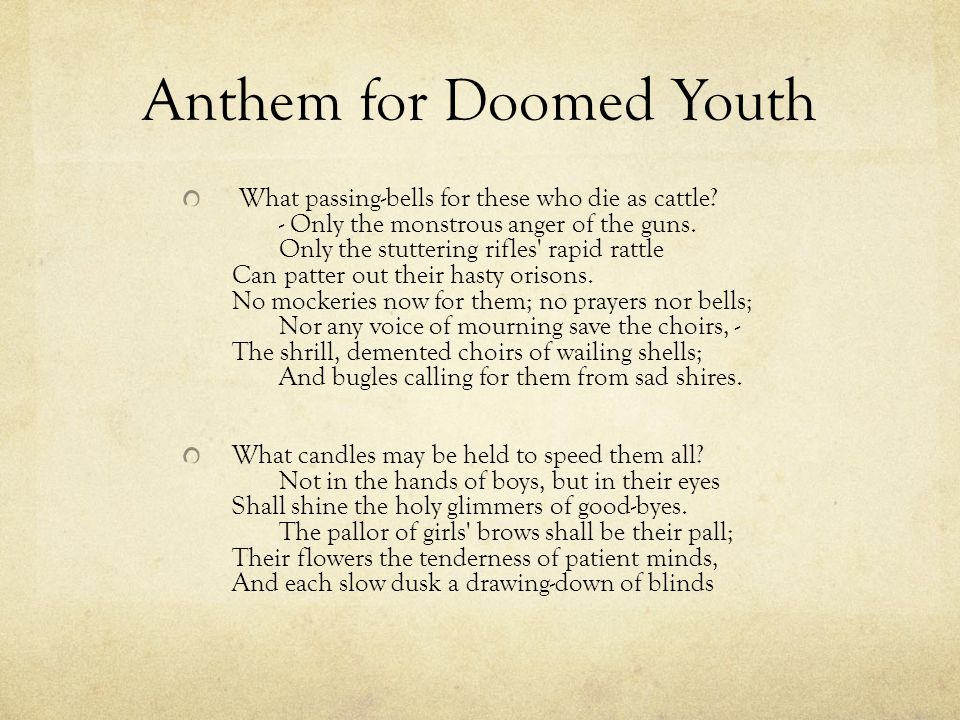
“Anthem for Doomed Youth” Poetry reading and discussion
Week 1 Blog Post: Create an atmospheric Youtube video of yourself reading and commenting on one of the war poems we have been exploring
This week I have created a video reading Anthem of Doomed Youth and commenting on the poem. Please follow the link to view my video:
The Unfinished Land- Summative Entry
Source https://visual.artshub.com.au
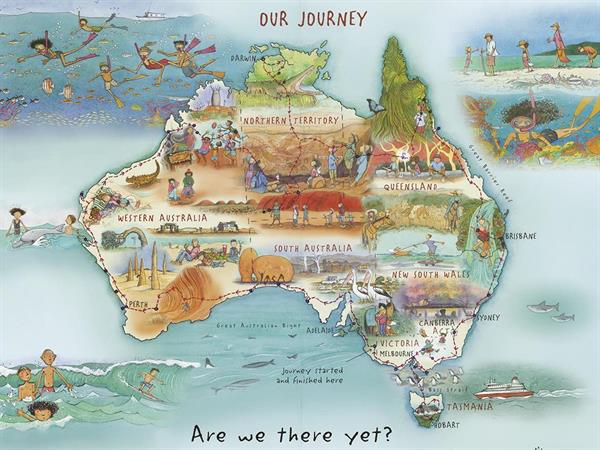
On the 1st of July this year Australian’s were blessed with yet another pseudo inspirational and seemingly insightful speech, by one of the multitude of well meaning middle aged white male representatives, as Mr David Hurley became our 27th Governor General. He spoke of David Malouf’s famous but slightly dated comment from 1979 “Australia is still revealing itself to us. We oughtn’t to close off possibilities by declaring too early what we have already become,” commenting that Australia is, 40 years later, amazingly still not a finished product. His speech included pleasantries aimed at minority groups and had the overwhelming flavour of the tasteful inaction to which we have become accustomed. But underlying it all was the sinister ringing of men who still are fixated with the idea of measurable growth, categorical labeling and the reaching of an endpoint, some hidden goal in a western, capitalist system. Even the absurd concept that a country could ever be “finished” is a telling sign of the lack of understanding and reality these leaders have on the existence and nature of humanity.
Of course Australia is not a finished product!
The mere suggestion that it even could be seems such an absurd concept. Maybe if Mr Hurley adopted a little of the approach of Indigenous Australians, of whom he spoke with such fondness, and their reciprocal, respectful coexistent relationship with Australia he would know that this categorising of our vast country is at best problematic. The blatant arrogance and self-importance of thinking that we in anyway define or have the authority to declare a country as either finished or unfinished, or that we could possibly ever define a nation as complete, is illogical! When we ourselves as humans are a mere microsecond on the vast timeline of earth. All countries and in fact the whole world are subject to the unpredictable and forever changing journey that is life. From politics, to religion, to technology, to generational characteristics and popular culture, immigration and multiculturalism, to the environment and our turbulent relationship with the plants and animals we co-inhabit this earth with, to the arts and literature and their shadow like following of societal changes…………all a constant changing tide.
Purely on a geographical and physical level our earth and more specifically our country, Australia, is constantly evolving. Once a part of the large Pangaea, in a time long before the window of human existence, now broken away and its own content. Once free of the infestation of humans, now deeply scared by our mines, destruction and infrastructure. Who knows what new changes and effects will behold our blue planet as we increasingly pollute and abuse her vast gifts. A country millions of years into evolution with constant weathering, erosion, sea level changes, periods of ice age and dynamic changes in flora and fauna is far from finished on its journey of change. I spoke of this in my blog ‘Thoughts on Pam Browns “At the Wall” and current political events’ touching on the current state of the environment and our need for increasing action on the issue after years of complacency, something I feel is extremely important and necessary for our countries survival.
With each generation brings new challenges and the eb and flow of population growth through multiculturalism and immigration is certainly one that regularly changes the face of Australia. From colonial invasion and the dramatic European influence this caused to the many waves of immigration since including Chinese gold rush, post World War ll eastern Europeans, 1970’s Vietnamese and other south east Asians, and modern-day Lebanese and middle eastern to name a few. With increasing globalisation these migratory trends will certainly continue bringing with them unknown social, popular culture and political changes and the Australian identity will bend to match this ever changing population. I commented on both colonial invasion and the ever changing and re-imagining of the Australian identity this semester in my blogs ‘Dear Mr Cook’ and ‘Patterson VS Lawson, and the Australian identity.’ These blogs were written with candid honesty and reflect much of my spirit and both the responsibilities and privileges of what it means to me to be Australian. The issue of reconciliation and aboriginal experience was also written about by other students this semester and I reviewed one piece on the Garma festival by Chikuru Malula, the need and relevance of this festival showing once again that Australia is by no means a finished product. Whilst the need for reconciliation and reformation on all Aboriginal areas still continues so too will the great damage to the culture and identity of Australia.
Source https://www.dreamstime.com
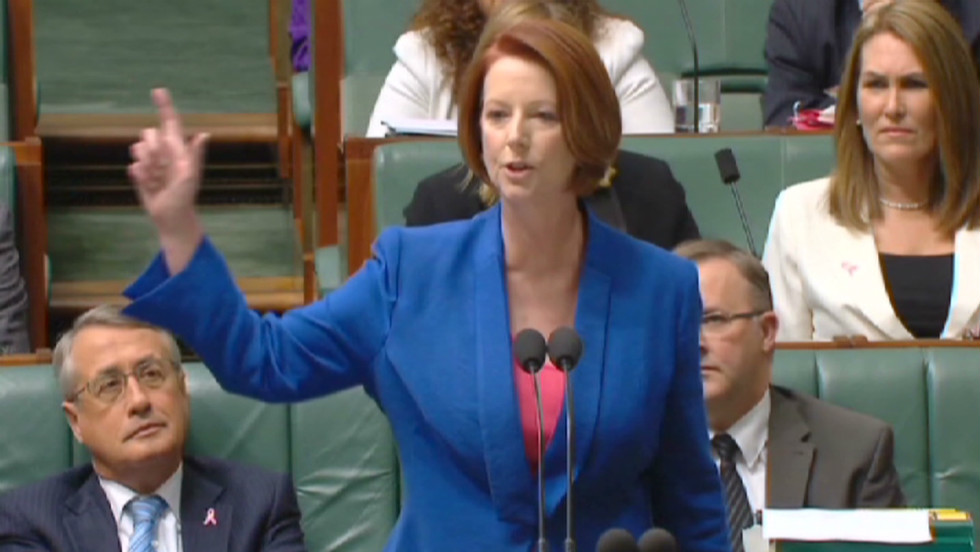
The final issue both myself and my peer reviewee Caitlin Burke felt needed addressing was the still evident problem of gender inequality, treatment of women and the feminist agenda, written about so well in Patrick White’s Miss Slattery and her Demon Lover and also covered in my analytical essay this semester looking at Barbara Baynton’s The Chosen Vessel and Henry Lawson’s The Drovers Wife. The simple fact that the speaker of this aforementioned quote, Mr David Hurley, the 27th Governor General is one of the 26 men who have been appointed to the role highlights this issue well. That’s right in Australia’s’ history we have had one female governor general, also notably only one female prime minister and currently 80 per cent of the government MPs and 78 percent of cabinet ministers are men (Sydney Morning Herald). This ceaseless divide in our country continues to hinder our relationships, leading to increased violence and abuse in homes and society, ongoing wage gap, uneven representation in professions, arts, media and sports, discrimination in work places, uneven domestic workloads, sexual assault and body autonomy issues. How could a country with so much to fix be even remotely considered “finished”? To see my blog on this click here or my peer review of Caitlin’s blog on the same topic click here.
Source CNN.com
We are so much better than this. This current state of divide, of left versus right, of discrimination, alienation and abuse of both nature and humanity. But neither growth nor a finish line is the answer, more a returning of balance, a changing of ways, a reconciliation if you will; with each other, with our country; with our home. An acceptance of ongoing and ever-adapting respectful stewardship until the end of our species existence, leaving this land to continue on without us as before, a country without limits, boundaries or the constant need for definition.
Peer Review 4
Abby Aaron- Write a description on Voss based on your own understanding of the text
Abby your summary of Voss is articulate and comprehensive. The succinct nature of your review is commendable given the word limit you have managed to summarise the story well, capturing the spirit of the novel. I particularly like your analysis of Trevelyn and the symbolism of her character. “White in his text creates such character intentionally to amplify and voice the issues of his time through the female character as through her he is able to voice the role of women in colonial Australian History.” This is so important to the story as White’s well known pairing of characters to create contrast and complete each other to find balance is really seen here. You possibly could have explored the importance of their spiritual relationship a little more deeply if the word count had allowed for it. Thank you for an enjoyable read.
Link to original blog posting by Abby Aaron: https://australianliteratureblogs.home.blog/2019/09/17/blog-4-patrick-white/
Peer Review 3
Caitlin Burke- Critically discuss how Patrick White comments on relationship dynamics and the uprising of a feminist movement in the 1960s in his short story “Miss. Slattery And Her Demon Lover”?
Fantastic blog topic Caitlin!! I also read this story as one of fantastic social and relational commentary. I similarly wrote a creative letter on the same topic and its so great to read your critical piece along the same lines. We must think alike! Your identification of his fantastic literary techniques that really make this story and its powerful message come to life are wonderful. I also love the symbolism in the piece. Your post covers two large topics, feminism and relationship imbalance, in a relatively small blog limit. I found myself left wanting a little more on both, but I think this is a refection on the word limit rather than your writing. Thank you for an enjoyable read.
Link to original blog post by Caitlin: https://caitlinsthoughtsonaustralianlit.wordpress.com/2019/09/16/critical-blog-3/
Dear Mr White
Write a letter to Miss Slattery telling her what you think about the decision she made to leave Szabo.

GETTY IMAGES
Dear Mr White
I feel compelled to write to you to express how moved I was by your story “Miss Slattery and her demon lover”. This story has left a profound mark on me and I have reread it a number of times to truly absorb it. I was at first shocked and then overwhelmed at how well you capture and expressed the abusive and controlling nature of this symbolic relationship and its representation of the power unbalance between men and women in our society.
The symbolism of the glass ceiling, although now 55 years on seen by many as a somewhat overused and outdated term, is one that I still whole heartedly feel is relevant and necessary in modern western society. How can one fight against a barrier that one doesn’t even have a name for?
The way that you use language to capture the control and oppressive nature of Tibby is one that left me rattled with familiarity. The subtle control mechanisms and the blatant emotionally abusive behaviour is one that occurs all to frequently and your calling out of this through your story was both brave and refreshing. All I can say is thank you.
Miss Slattery’s self-realisation and breakthrough was a moment of absolute awe and inspiration. I could feel the glass ceiling shatter above and the pieces crinkle and splinter as they lay around me on the floor. These moments in a woman’s life are rare but extremely powerful and important. Through years of subliminal oppression and sometimes in the face of blatant discrimination, control and abuse we push on but these moments, these whip cracking, shirt ripping, power-filled freedom moments are what make us. For me Miss Slattery’s decision to leave after this moment was incidental. Whether she chose to leave or stay now it was clear it would be on her terms, and that is what equality and feminism is all about: choice.
Thank you for so articulately and courageously bringing this to life in your story and empowering women readers to shake off the demands and expectations of men and to take our lives in our own hands and make them cracking!
Yours Sincerely
Miss Baker
Thoughts on Pam Browns “At the Wall” and current political events
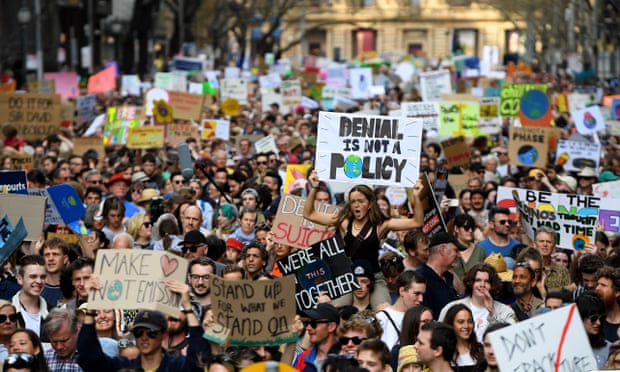
Source: The Guardian Australia
“Will anyone ever agitate again?
When will they occupy the privatised academies?”
This last week we read the sarcastic and scathing social commentary poem of Pam Brown “At the Wall” and the irony of this being an assigned reading in the week of the largest climate protests the world has ever seen and the UN Climate change summit is not lost on me. Browns criticisms of Australia’s complacency and self-gratifying, meaningless tokenism towards the issues of the decade are still echoing across our beautiful country. 25 years later and nothing has changed!! Our leaders still smile while they placate our weak cries of outrage with empty promises of better days.
For so long the Australian public and maybe more concerning, the supposed intellectual leaders of our society, the academics, have stayed quite about off shore detention centres, indigenous discrimination, the selling off of Australian resources, live stock exporting, increasing violence against women, continuous tax breaks for high income earners and so much more. Finally, thou we may be making Brown proud, finally there is an issue that seems such an existential threat that we can no longer “look at the stars”. This week an open letter has been published calling out the Australian government and declaring support for climate rebellion. Singed by over 250 leading academics from all of Australia’s top universities it is a powerful call to action. This letter coupled with the School strike climate protests which drew crowds of more than 300,000 across Australia on Friday leave a small flame of hope that Australia is not still standing “at the wall”.
But after Scott Morrison’s blatant snubbing of the UN Climate Change Summit this week in New York and his obscene spending of $150 million of tax payers money on a NASA project while our drought stricken farmers are left barren and begging it makes me wonder if all our noise is falling on deaf ears. It makes me ponder Browns words “here, in the country without guilt, when will the menacing, the history, begin?”
Sources:
Pam Brown “At the Wall” Macquarie PEN Anthology pg 1152
Below is the full text from the open letter for your convenience.
“We the undersigned represent diverse academic disciplines, and the views expressed here are those of the signatories and not their universities. While our academic perspectives and expertise may differ, we are united on one point: we can no longer tolerate the failure of the Australian government, or any other government, to take robust and urgent action to address the worsening ecological crisis.
The science is clear, the facts are incontrovertible. We are in the midst of the sixth mass extinction, with about 200 species becoming extinct each day. This includes many species of insects, some of which are essential to our food systems. Many people around the world have already died or been displaced from the effects of a rapidly warming climate. July 2019 was the Earth’s hottest on record. Arctic peat is burning and ice is melting at rates far beyond even the most radical scientific predictions. The Amazon is burning at an alarming rate. All are creating devastating feedback loops, releasing more CO2 and reducing the Earth’s heat reflecting capacities.
Humans cannot continue to violate the fundamental laws of nature or ignore the basic science with impunity. As oceans rise and temperatures soar, ecosystems will continue to collapse. As resources diminish, social unrest and civilisation collapse are likely. The most marginalised and vulnerable in society will be hit first and hit hardest. And If we continue on our current path, the future of our own species is bleak.
The Earth has already undergone a 1C rise in global mean temperature since pre-industrial times and reports now suggest that a rise of any more than another 0.5C will be devastating. Preventing this will require a global transition to zero-carbon economies immediately. Conservative reports say we have 30 years to make this transition, but more recent science suggests we have closer to 10. Fortunately, we have the technology available to do this, but it will only be possible if we act now, and urgently.
Australia’s current climate policies and practices are dire. Rather than making the urgent structural changes necessary for a sustainable and just transition toward zero emissions, the Australian government is continuing to prop up and expand coal and other CO2-emitting industries. Australia is not even meeting its Paris agreement targets which, according to recent reports, are themselves far from adequate.
It is unconscionable that we, our children and grandchildren should have to bear the terrifying brunt of this unprecedented disaster. When a government wilfully abrogates its responsibility to protect its citizens from harm and secure the future for generations to come, it has failed in its most essential duty of stewardship. The ‘social contract’ has been broken, and it is therefore not only our right, but our moral duty, to rebel to defend life itself.
We therefore declare our support for the Extinction Rebellion (XR) movement and the global week of non-violent civil disobedience and disruption planned for October. We stand behind XR’s demands for the Australian government to declare a climate emergency and to establish a citizens’ assembly to work with scientists on the basis of current evidence to develop a credible and just plan for rapid total decarbonisation of the economy.
In addition, we call on all Australian universities and other major institutions to immediately divest funds from all fossil fuel and other industries which are contributing to the climate crisis, and to redirect investments urgently toward the renewable energy sector and other climate enhancing technologies.
We also recognise the crucial role First Nations people in Australia and across the globe, have played for tens of thousands of years, and continue to play, in maintaining species, and caring for the land, water and air. We therefore declare our support for the urgent establishment of a treaty with First Nation Australians, to recognise Indigenous sovereignty and to support Aboriginal and Torres Strait Islander communities to continue protecting what they have already cared for, for so long.”
Signed by over 250 academics from all of Australia’s leading universities
 Em's Literature Blog